It's 2 AM. You wake up to loud thumping sounds coming from your ceiling.
Your spouse whispers: "What IS that?"
You have no idea. But it's big. And it's moving around up there like it owns the place.
Most homeowners assume any large animal in the attic is a raccoon. But there's another common culprit that causes similar noise: opossums.
While both animals create loud disturbances, they behave very differently, cause different types of damage, and require different approaches for removal.
Here's how to tell whether you're dealing with opossums or raccoons—and what to do about it.
Why It Matters Which Animal You Have
"Can't you just get rid of whatever it is?"
Not that simple.
Different animals require different exclusion methods:
Opossums:
- Less destructive
- Easier to exclude
- Lower health risks
- Cheaper removal ($800-1,500)
Raccoons:
- Highly destructive
- Require heavy-duty materials
- Significant health risks (rabies, roundworm)
- More expensive removal ($1,500-3,500)
Knowing what you have helps you understand:
- How urgent the problem is
- What kind of damage to expect
- What removal will cost
- What health precautions to take
Opossum vs. Raccoon: Quick Comparison Chart
Factor
Opossum
Raccoon
Size
4-14 lbs
10-30 lbs
Active Time
Night
Night
Sound Volume
Moderate
LOUD
Destructiveness
Low-Moderate
High
Entry Point Size
3-4 inches
8-12 inches
Droppings
1-2" tubular
2-3" tubular, seeds
Health Risk
Low
High (rabies, roundworm)
Nesting Behavior
Temporary
Long-term
Removal Cost
$800-1,500
$1,500-3,500
HOW TO IDENTIFY BY SOUND
Timing: When Are They Active?
Both opossums and raccoons are nocturnal.
Peak activity times:
- 10 PM – 2 AM (leaving to forage)
- 4 AM – 6 AM (returning before sunrise)
If you hear sounds during the day, it's NOT an opossum or raccoon. It's likely squirrels (diurnal, active during daylight).
Volume: How Loud Is It?
Opossums: Moderate Volume
Opossums weigh 4-14 lbs (similar to a large cat). Their movement sounds like:
- Steady walking (not running)
- Occasional thumps when jumping
- Slower, more deliberate movements
You'll definitely hear it, but it's not earth-shaking.
Raccoons: LOUD Volume
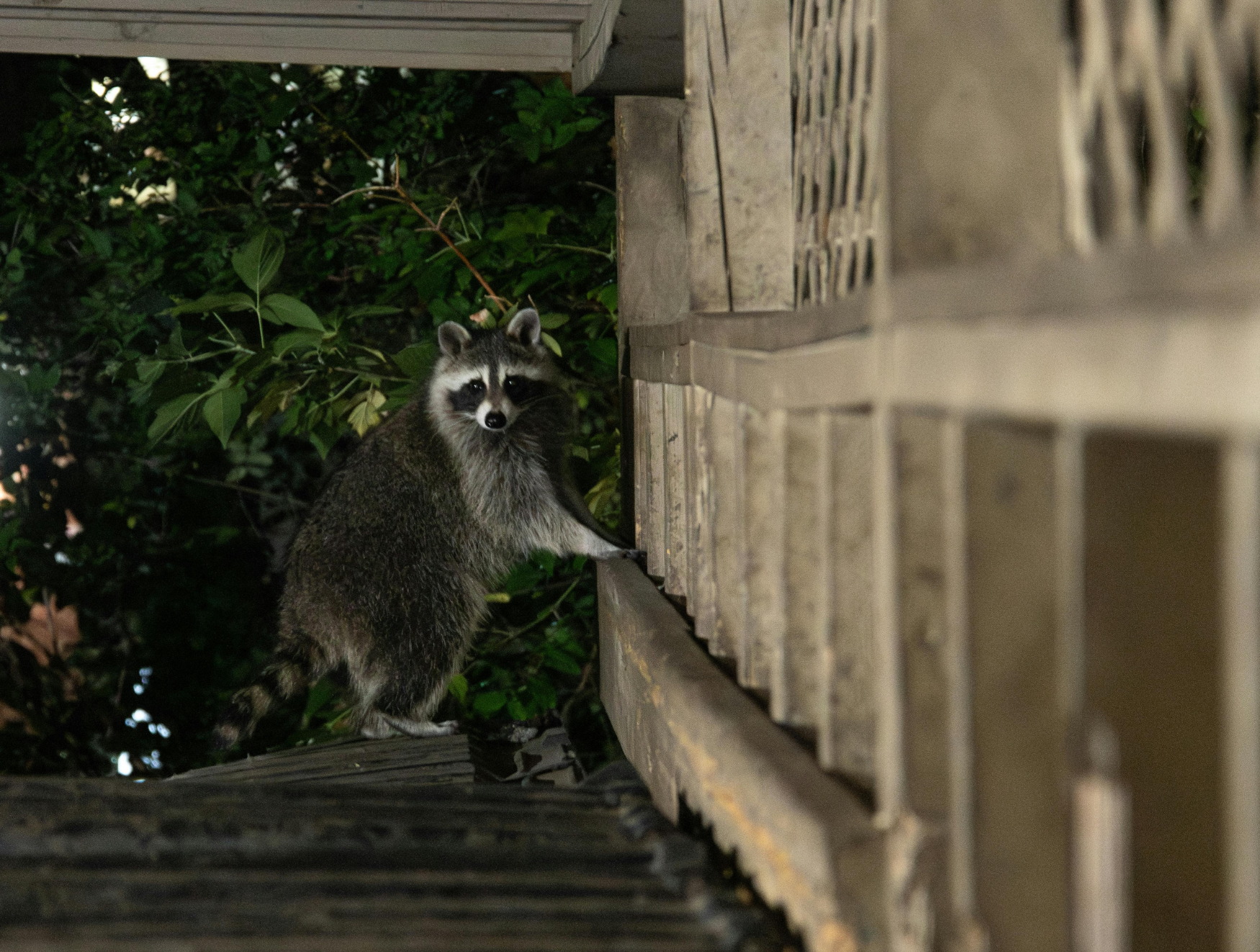
Raccoons weigh 10-30 lbs. When they walk across your attic, it sounds like:
- A person walking overhead
- Heavy thumping and banging
- Furniture being moved
- Objects being knocked over
Raccoons wake you from a dead sleep. The noise is unmistakable.
Type of Sound
Opossums:
- Slow, steady walking
- Occasional hissing (if threatened or fighting)
- Minimal vocalizations
- Sound moves slowly across attic
Raccoons:
- Heavy, deliberate footsteps
- Loud thumping when jumping
- Chattering, growling, chirping sounds
- Crying sounds (if babies present—sounds like birds)
- Sound is aggressive and disruptive
If it sounds like a small person stomping around, it's a raccoon.
HOW TO IDENTIFY BY ENTRY POINT DAMAGE
Opossums: Opportunistic Entry
Opossums don't create entry points—they use existing ones.
Common opossum entry points:
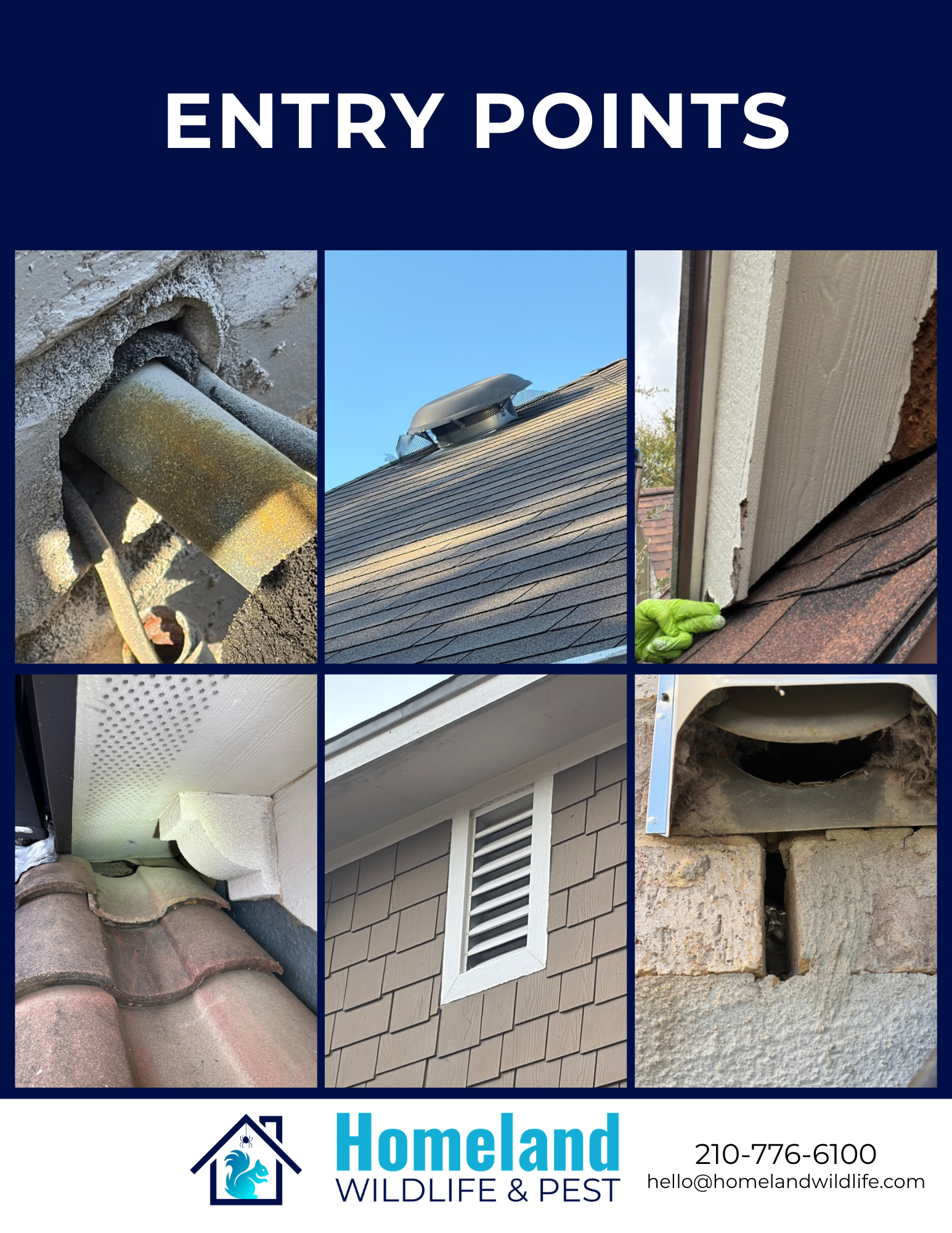
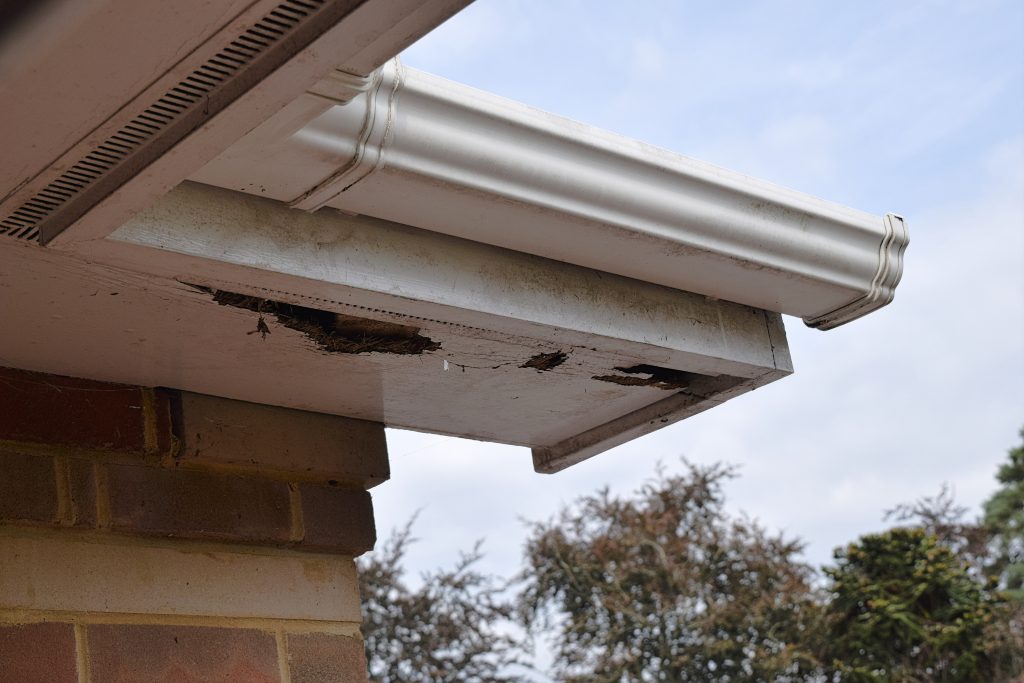
- Damaged soffit gaps (3-4 inches)
- Broken attic vents
- Gaps in foundation (ground-level access, then climb into attic via walls)
- Open crawlspace vents
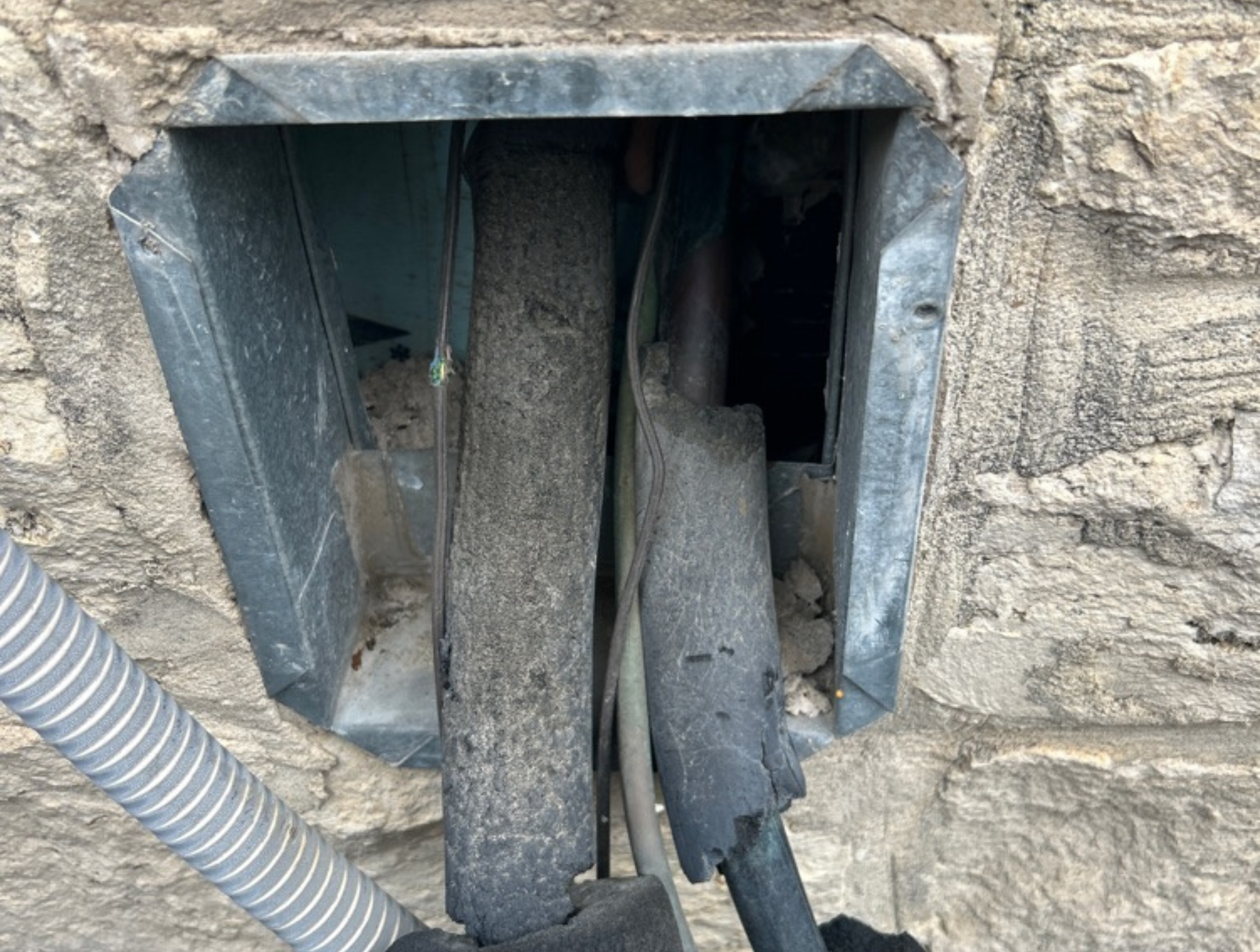
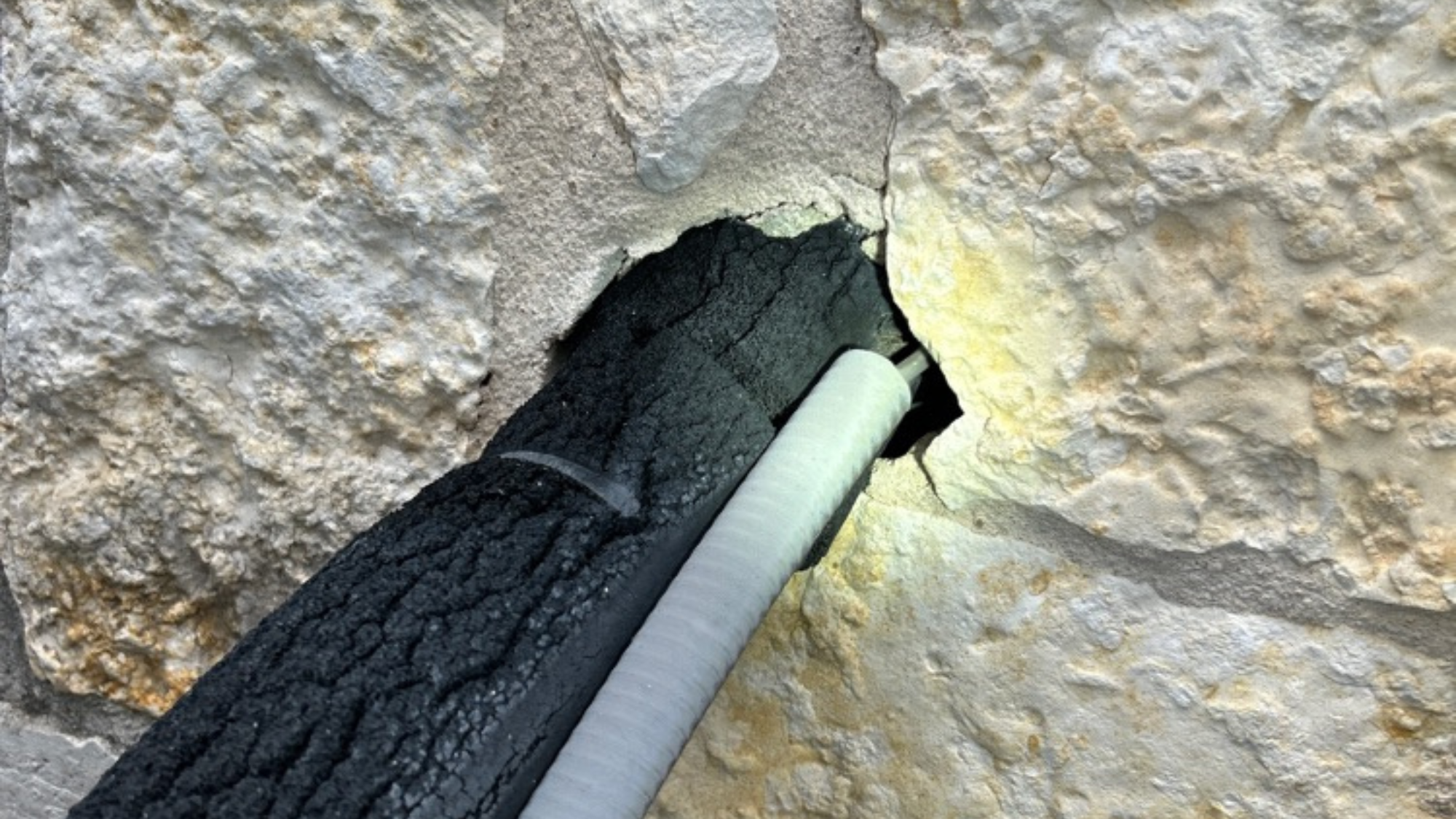
- Gaps around AC line chases
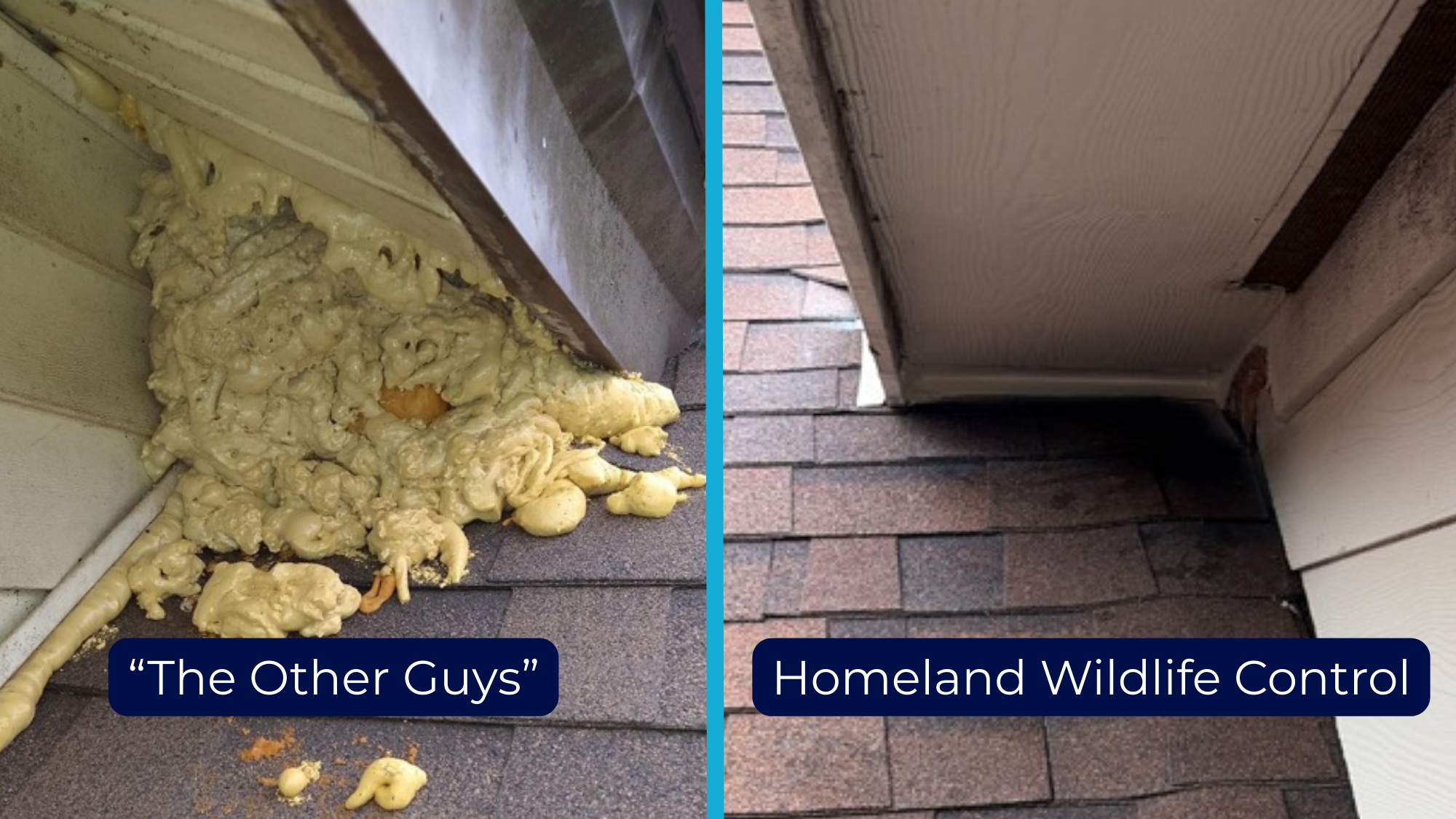
Entry points look weathered and worn—not freshly damaged.
Opossums are not strong chewers. If you see fresh chew marks, it's not an opossum.
Raccoons: Destructive Entry
Raccoons are STRONG and destructive.
How they create entry points:
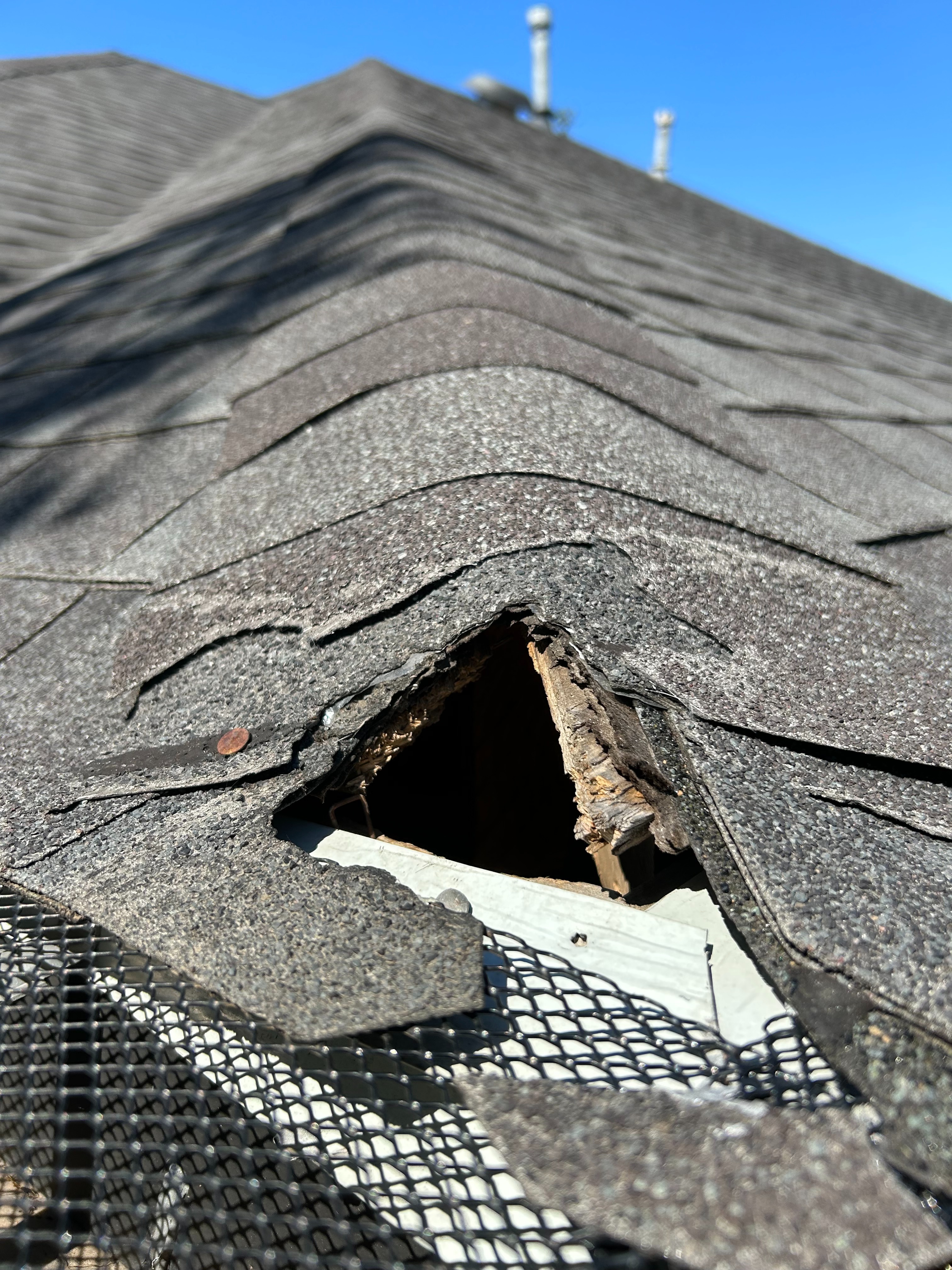
- Tear through roof shingles and decking (8-12 inch holes)
- Rip off soffit panels
- Tear through damaged fascia boards
- Pry apart roof returns and trim
Damage is obvious and severe:
- Large, jagged holes
- Torn materials
- Fresh wood splinters
- Significant structural damage
If your attic entry point looks like something exploded through it, it's a raccoon.
HOW TO IDENTIFY BY DROPPINGS
Opossum Droppings
Size: 1-2 inches long
Shape: Tubular with tapered ends (similar to cat droppings)
Color: Dark brown to black
Texture: Smooth
Contents: May contain fur, bones, or insect parts
Location: Scattered randomly (opossums don't designate bathroom areas)
Health risk: Low. Opossums rarely carry rabies and their droppings are less toxic than raccoon feces.
Raccoon Droppings
Size: 2-3 inches long
Shape: Tubular with blunt ends (similar to small dog feces)
Color: Dark brown to black
Texture: Rough, may show visible seeds or food particles
Contents: Often contains berries, seeds, corn, or other identifiable food
Location: Piled in "latrines" (designated bathroom areas—raccoons are oddly tidy about this)
Health risk: HIGH. Raccoon feces contain roundworm eggs (Baylisascaris) that cause severe neurological damage in humans. Never touch or disturb raccoon feces without proper protection.
HOW TO IDENTIFY BY DAMAGE PATTERNS
Opossum Damage: Minimal and Temporary
What opossums do in attics:
- Use attic temporarily (not long-term nesting)
- Create small nests from existing insulation
- Leave droppings scattered around
- Minimal chewing or destruction
Typical opossum damage:
- Slight insulation disturbance
- Droppings in various locations
- Odor (but not as strong as raccoon urine)
Estimated cleanup cost: $500-1,000
Opossums are nomadic. They use your attic for a few weeks, then move on. They don't establish permanent dens.
Raccoon Damage: Extensive and Destructive
What raccoons do in attics:
- Establish long-term dens (especially mothers with babies)
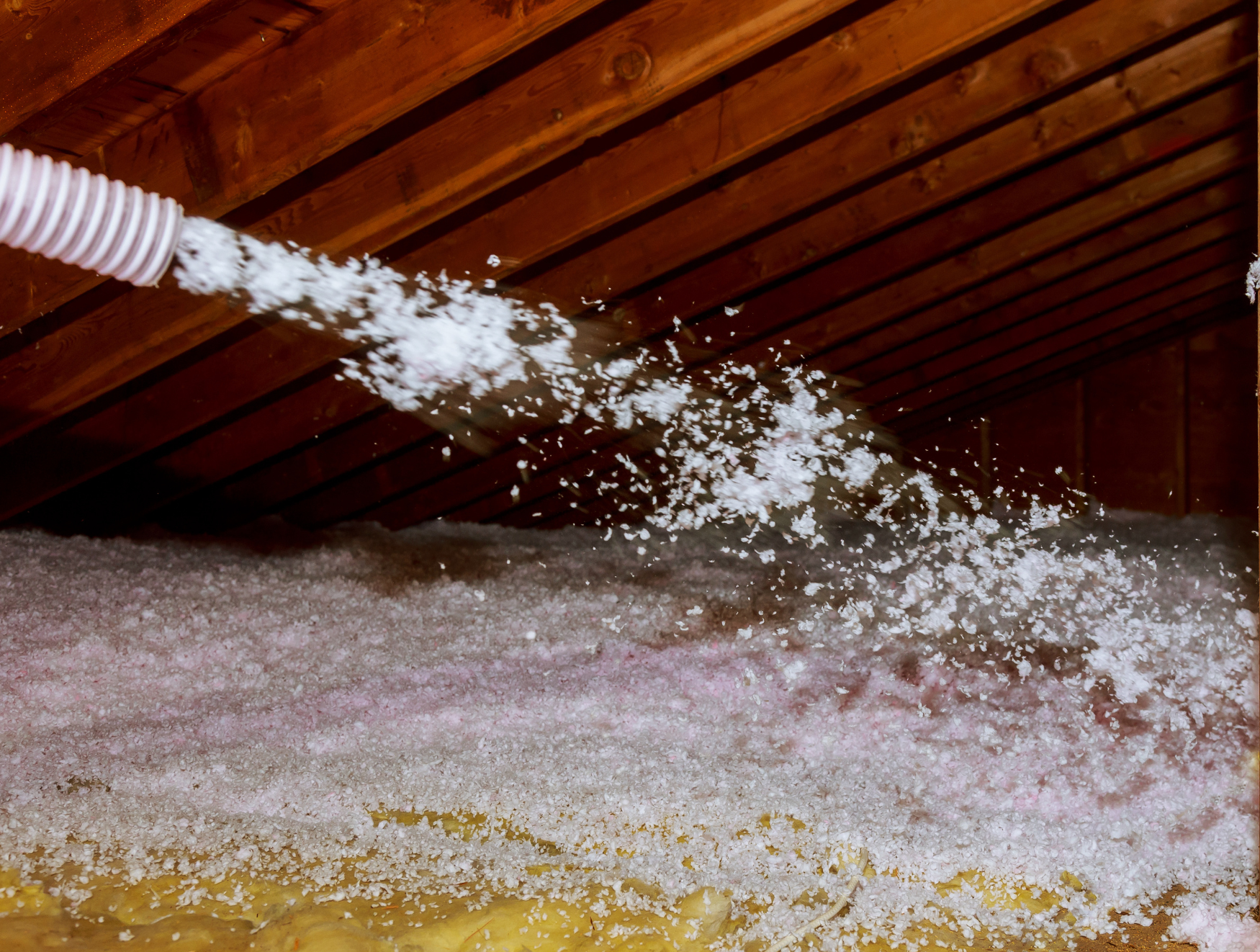
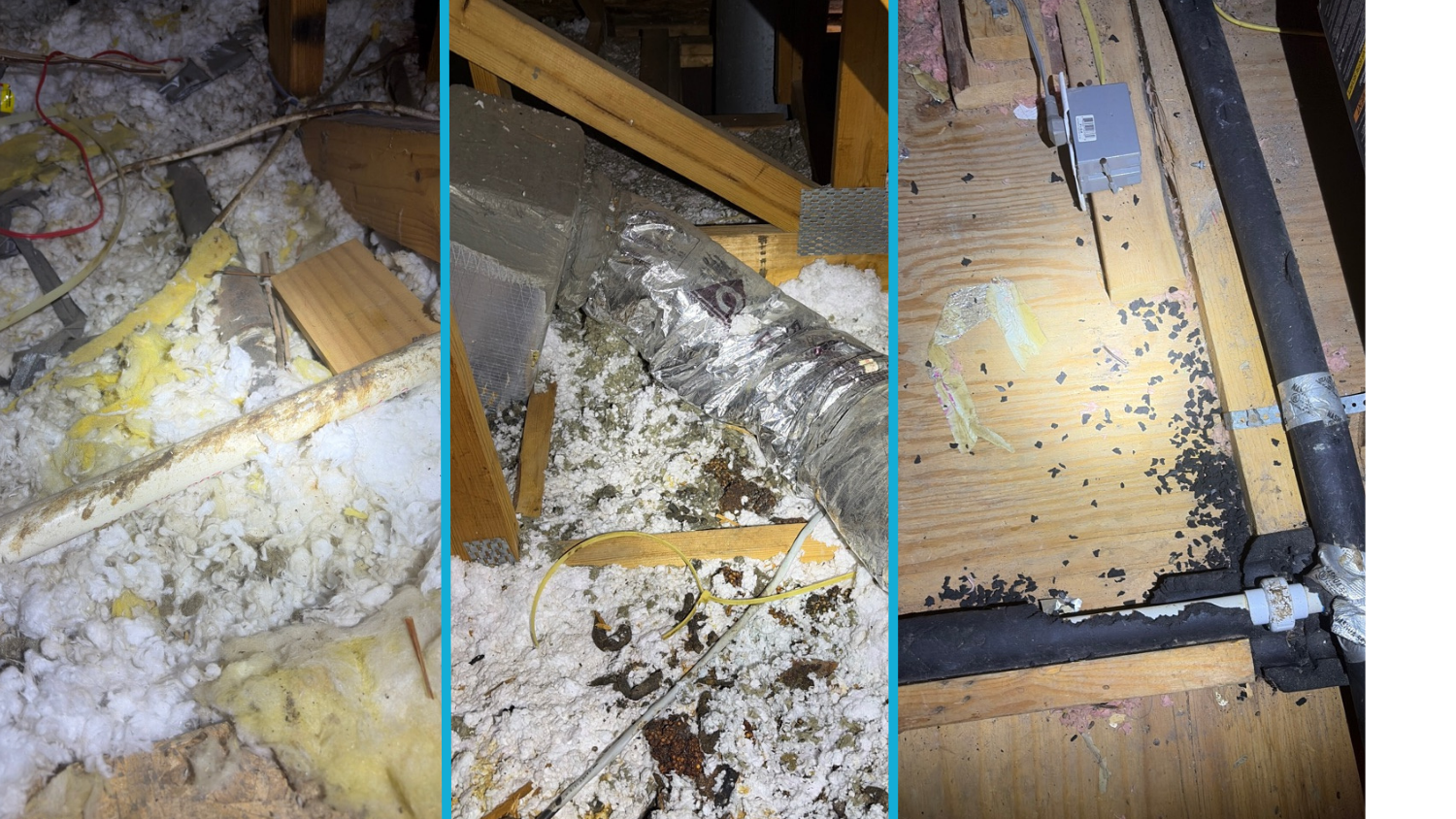
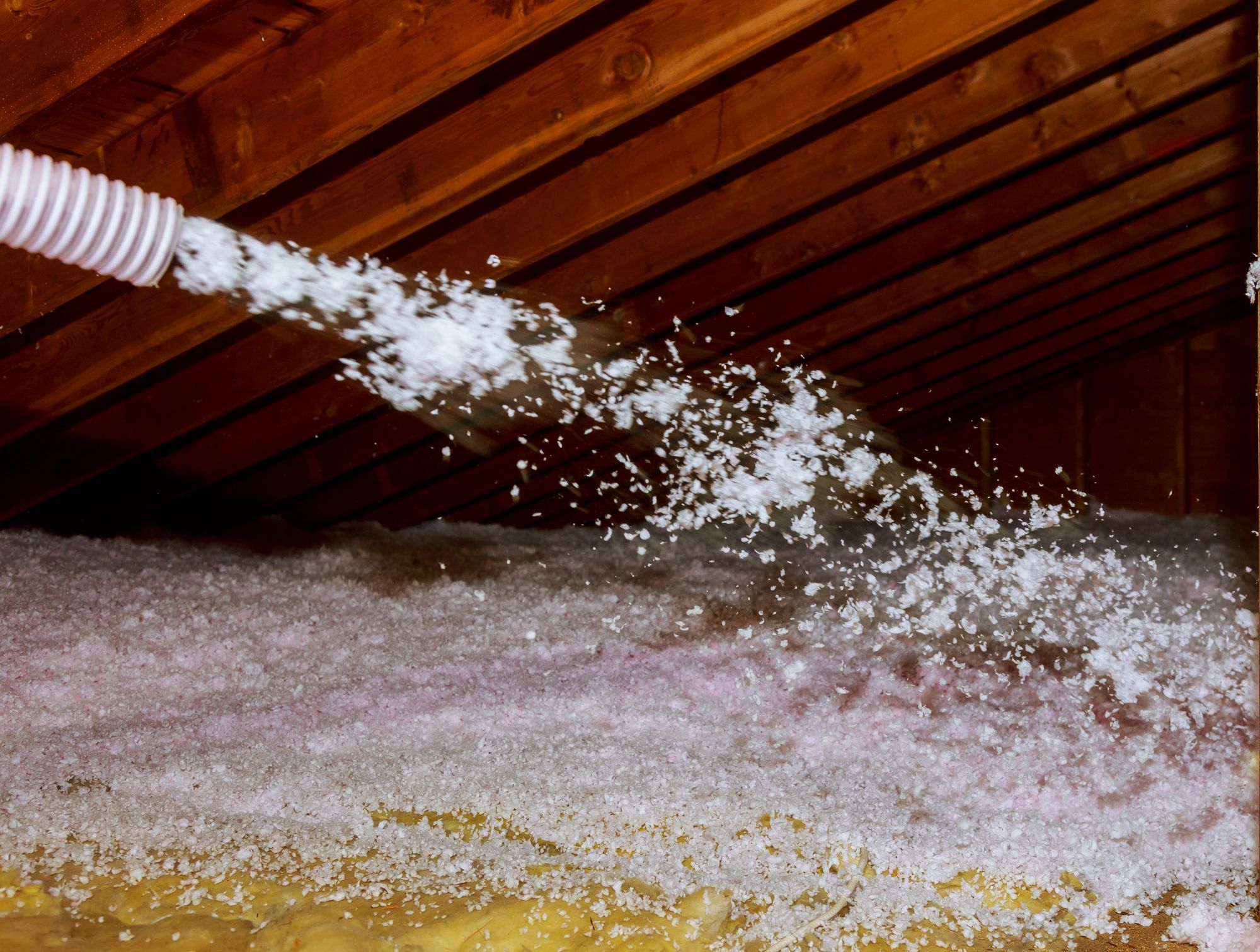
- Tear apart insulation to create large nests
- Destroy ductwork and wiring
- Create bathroom latrines (piles of feces in designated spots)
Typical raccoon damage:
- MASSIVE insulation destruction (entire sections torn up)
- Torn HVAC ducts
- Chewed wiring
- Latrine contamination (health hazard)
- Ceiling stains from urine saturation
- Strong, persistent odor
Estimated cleanup cost: $2,000-6,000
Raccoons stay for months if not excluded. They're territorial and return to the same den site year after year.
HOW TO IDENTIFY BY BEHAVIOR
Opossum Behavior
What opossums do when threatened:
- "Play possum" (freeze and appear dead)
- Hiss and show teeth (looks scary but rarely bite)
- Generally avoid confrontation
Personality:
- Shy and reclusive
- Non-aggressive (unless cornered)
- Prefer to flee rather than fight
Nesting:
- Temporary shelter (2-4 weeks)
- Move frequently between locations
- Don't establish permanent dens in attics
Diet:
- Omnivores (insects, rodents, fruit, garbage)
- Eat ticks (a beneficial trait!)
- Forage on ground, not in trees
Raccoon Behavior
What raccoons do when threatened:
- Stand ground and growl
- Show teeth and make aggressive vocalizations
- WILL attack if cornered (especially mothers with babies)
Personality:
- Bold and curious
- Intelligent (can open latches, doors, containers)
- Territorial and aggressive when defending den
Nesting:
- Long-term dens (3-6 months)
- Mothers with babies stay through summer
- Return to same den site year after year if not excluded
Diet:
- Omnivores (fruit, insects, small animals, garbage)
- Known for "washing" food in water
- Excellent climbers (access roofs via trees, fences, siding)
HEALTH RISKS: WHICH IS MORE DANGEROUS?
Opossum Health Risks: LOW
Rabies:
- Opossums RARELY carry rabies (their low body temperature makes rabies virus difficult to survive)
- One of the least likely mammals to have rabies
Other diseases:
- Can carry leptospirosis (bacterial disease from urine)
- Can carry parasites (fleas, ticks, mites)
Risk level: Low, but still avoid direct contact
Raccoon Health Risks: HIGH
Rabies:
- Raccoons are under rabies quarantine in Texas
- One of the most common rabies carriers in the U.S.
- ANY raccoon should be assumed potentially rabid
Roundworm (Baylisascaris):
- Raccoon feces contain roundworm eggs
- Eggs remain infectious in environment for YEARS
- Causes severe neurological damage and blindness in humans
- Especially dangerous for children
Leptospirosis:
- Bacterial disease spread through raccoon urine
- Causes flu-like symptoms, liver damage, kidney failure
Risk level: HIGH. Never handle raccoons or their feces without proper protection.
HOW TO TELL WHICH ANIMAL YOU HAVE (CHECKLIST)
Use this checklist to identify your attic invader:
YOU PROBABLY HAVE AN OPOSSUM IF:
☐ Sounds are moderate volume (not earth-shaking)
☐ Entry point is 3-4 inches and looks weathered (not freshly torn)
☐ Droppings are 1-2" and scattered randomly
☐ Damage is minimal (slight insulation disturbance)
☐ No strong odor or bathroom "latrine" areas
☐ Animal seems temporary (comes and goes)
YOU PROBABLY HAVE A RACCOON IF:
☐ Sounds are LOUD (sounds like a person walking)
☐ Entry point is 8-12 inches and freshly torn apart
☐ Droppings are 2-3" and piled in designated areas (latrines)
☐ Damage is extensive (destroyed insulation, torn ducts)
☐ Strong odor and visible urine stains
☐ Animal seems permanent (hears sounds regularly for weeks)
WHAT TO DO IF YOU HAVE OPOSSUMS
Step 1: Confirm It's Actually an Opossum
Use the checklist above. If you're unsure, call for a professional inspection.
Step 2: Exclude Humanely
Opossums are easy to exclude:
- Install one-way door at main entry point
- Seal all other potential entry points
- Opossum exits within 2-5 days and can't return
Timeline: 3-5 days
Cost: $800-1,500
Step 3: Clean Up (Minor)
Opossum cleanup is usually minimal:
- Remove small amount of nesting material
- Sanitize affected area
- Check for parasites (fleas, ticks)
Cost: Included in exclusion price or +$200-500 if extensive
WHAT TO DO IF YOU HAVE RACCOONS
Step 1: Do NOT Approach or Attempt DIY Removal
Raccoons are dangerous.
- Rabies risk
- Will attack if cornered
- Mothers with babies are especially aggressive
Call professionals immediately.
Step 2: Professional Exclusion (Heavy-Duty)
Raccoon exclusion requires:
- Heavy-gauge steel mesh (raccoons are strong)
- Reinforced sealing of all entry points
- One-way door for mother to exit
- Manual baby removal if present (babies can't exit one-way doors)
Timeline: 1-2 weeks
Cost: $1,500-3,500 (depending on damage extent)
Step 3: Complete Attic Restoration
Raccoon damage requires extensive cleanup:
- Remove ALL contaminated insulation (roundworm risk)
- Sanitize attic thoroughly with proper disinfectants
- Seal and treat latrine areas specifically
- Replace insulation to proper R-value
Cost: +$2,000-4,000
This is NOT optional. Raccoon feces are a serious health hazard.
CAN YOU HAVE BOTH OPOSSUMS AND RACCOONS?
Yes, but not at the same time.
Opossums and raccoons avoid each other. Raccoons are larger and more aggressive, so they dominate territory.
If you have:
- Raccoons: No opossums (raccoons scare them off)
- Opossums: Probably no raccoons (but they could move in after opossums leave)
Exception: Large properties or multiple entry points may have different animals using different spaces.
WHY YOU SHOULDN'T WAIT
Opossums:
- Usually leave on their own within a few weeks
- But they may return repeatedly if entry points aren't sealed
- Minor damage becomes moderate damage over time
Better to exclude now than deal with repeat visits.
Raccoons:
- Do NOT leave on their own
- Establish permanent dens
- Cause thousands in damage
- Create serious health hazards
Every day you wait, damage gets worse and more expensive.
HOW HOMELAND WILDLIFE HANDLES BOTH
Our Process:
1. Inspection
- Identify which animal (or animals) you have
- Locate all entry points
- Assess damage extent
- Provide written estimate
2. Exclusion
- Install one-way doors at active entry points
- Seal ALL other vulnerabilities with appropriate materials:
- Opossums: Standard steel mesh
- Raccoons: Heavy-duty reinforced mesh
- Monitor until animals are confirmed gone
3. Cleanup
- Opossums: Basic sanitization
- Raccoons: Complete attic restoration with roundworm precautions
4. Warranty
- All work backed by renewable lifetime warranty
- If animals return through our seals, we fix free
The Bottom Line
Hearing loud thumping at night?
It's either an opossum or a raccoon.
Opossums:
- Moderate noise
- Minimal damage
- Low health risk
- Easier/cheaper to remove
Raccoons:
- LOUD noise
- Extensive damage
- High health risk (rabies, roundworm)
- More expensive to remove
Either way, don't wait.
Call for a free inspection. We'll identify exactly what you have and provide a clear plan to remove it permanently.
Hearing thumping in your attic? Call Homeland Wildlife & Pest Control at 210-776-6100 for a free inspection. We'll tell you exactly what you're dealing with and solve it fast. 14 years serving San Antonio. Lifetime warranty.


.png)

.png)
.png)

%20(6.8%20x%206.8%20in)%20(2).png)

.png)


.png)

.png)
.png)
.png)
.png)
.png)

.png)
.png)
.png)
.png)
.png)


.png)
.png)
.png)
.png)
.png)
.png)
.png)
.png)
.png)




.png)
.png)

%20(6.8%20x%206.8%20in)%20(1).png)
.webp)
.png)

.png)
.png)